|
|
||||
 
|
||||
|
|
CHARLES BROWN |
|||
|
The best examples come by way of the two lead off tracks, the title track “Wind Of The Northern Light” and “Ancient Highlands”. Both introduce a kind of sonic call to arms with Charles’ fretboard finesse in march-like precision. That kind of accuracy bleeds into the third track “Final Threshold”. For example, if Charles led a trio of like-minded musicians on this album, it would probably be heralded as a new breakthrough of hard rock instrumentals. Being a self-contained artist that does it all, Charles packs as much glory as possible into his concept, making Wind Of The Northern Light his best album yet. Although he has also been included on a number of compilations on the New Jersey-based Bongo Boy label, including various New Age, blues and metal tracks, on Wind Of The Northern Light, Charles gets back to what he does best; Townshend-inspired, orchestrated rock tracks that sound inspired by Townshend’s eclectic guitar sounds on masterpieces like the 1973 Quadrophenia album. When his fretboard sounds lie back on a bedrock of guitars, Charles doubles counter melodies that takes another road exploring his expertise on synths and his drumming, all in support of his multifaceted guitar concepts that continues to improve and impress. Interestingly on Wind Of The Northern Light, there’s hardly a track that doesn’t deserve its own merit. Sometimes, I wish Charles did have a full band with him. Thankfully, with today’s technology, the do it yourself one man band concept has made significant strides. Not saying that Charles is a spinoff of so many other high-profile musicians also cited as self-contained artists, yet within the fusion, hard rock and various guitar instrumental genres, Charles Brown continues to work magic with his own distinctive and meticulously crafted guitar / synth melodies.
mwe3.com presents the 2026 interview with
Charles Brown: Wind Of The Northern Light is a collection of songs I’ve been working on for the past few years. It’s a continuation of the style I’ve had on previous CDs: Rockin’ guitar riffs, with guitar synth melodies and textures with prog elements. mwe3: How do you strive to improve your sound and style with each album? How long did it take to write and record Wind Of The Northern Light and can you give some background on the recording? Charles Brown: This past year I upgraded my recording setup to the latest Pro Tools. Hopefully that helps with the sonic quality. When I write new songs it’s usually on acoustic, or electric that’s not plugged in. I try to get everything fleshed out and play it over and over for a while till it flows and all comes together. Even though I’m overdubbing the parts, I always lay the basic song down all the way through like doing it live. mwe3: Wind Of The Northern Light makes an interesting contrast between this album and some of your contributions on the Bongo Boy label. It’s not overly stylized, so how would you say Wind Of The Northern Light captures your sound and vision? Charles Brown: The things I’ve done with Bongo Boy have been more blues or straight ahead rock oriented. With Wind Of The Northern Light I’m encompassing all the other influences I have as well, which includes prog, classical, and acoustic elements. mwe3: Can you give a list of what instruments, synths and sound devices you used on Wind Of The Northern Light? What guitars or other keyboard enhancements are you featuring on the album? What guitar is mostly featured – what’s your go-to guitar. Charles Brown: Wind Of The Northern Light features a lot of Roland GR30 guitar synth. In fact, anything that you might think is a keyboard, is actually the guitar synth. For the straight guitar sounds, I’m using mainly a Les Paul Studio, my Ritchie Blackmore signature Fender Strat, and my other Strat that has a MIDI pickup for use with the GR30. For the acoustic parts, I’m mostly using a Fender acoustic that I used to use when I was involved with the Substitutes. It has a really warm sounding Furman preamp. mwe3: Do you have any favorite tracks on Wind Of The Northern Light and what tracks were among the first written and recorded? Charles Brown: One of the tracks I’m kind of partial to is “Embers Of An Ancient Age”. It’s in a unique tuning I came across: FACGCE. Its very ethereal sounding, and it inspired me to put together a type of mini prog-suite. It’s kind of like Pat Metheny meets Marillion. mwe3: I felt that the first 3 tracks, “Wind Of The Northern Light”, “Ancient Highlands” and “Final Threshold” form a kind of sonic suite. Are those first three tracks connected in some way?
mwe3: Is there a story behind the title Wind Of The Northern Light? You seem to prefer expansive concept-prone titles. Does the wind and fire concept hold some secret fascination for you as it pertains to your music? Charles Brown: There was a giant sun/magnetic storm a while back that caused the Aurora Borealis to be seen farther south than normal. That triggered the thought of “Northern Lights” with me. I’m also really influenced by the classic prog bands, and especially Kansas, who did music and artwork/album names that evoke visions of wide open landscapes and proggy album names. mwe3: Can you talk about “Embers Of An Ancient Age”? Would you consider that track more prog compared to hard rock? Would you say there’s more overdubbing of different instruments on “Embers Of An Ancient Age”. It’s also the longest track on Wind Of The Northern Light. Charles Brown: That track features a special tuning: FACGCE. When I started messing with it, it opened up the idea to do a whole prog-ish mini suite. It definitely has a lot of guitar synth, very inspired by Marillion and Pat Metheny. mwe3: What can you tell us about “Fire & Fury”. Again the fire element is in play and true to form the result is quite furious. The key change near the end is quite stellar sounding. Fiery but sweet! Charles Brown: The last few songs of the CD I wanted to blast out with a couple of hard rockers to show that side of things, and then end the album with a textural/acoustic piece; “The Fading Sunlight”. It’s more of the ‘Light & Shade’ kind of thing.
Charles Brown: “Chase The Sun” is a kind of Pat Metheny acoustic based thing. The melody is the guitar synth with a trumpet type sound. Once again its more of the ‘Light & Shade’ thing after a couple of harder rockers. mwe3: Is “Ride Or Die” the same track on the Bongo Boy compilation? I don’t remember the gothic intro. You sound like Rick Wakeman. Who does the guitar sound and style remind you of? Charles Brown: “Ride Or Die” is from one of the Bongo Boy compilations that was on Emidio’s Rock Den. To change it up a bit, I added an intro of a Renaissance piece using the guitar synth in a church organ patch. I’ve always loved Rick Wakeman’s organ solo on “Awaken” with YES. The song itself is super hard rock, almost Iron Maiden-ish with Ritchie Blackmore guitar solos. mwe3: How about “Ocean Horizon”? Is that the dedicated acoustic guitar based track on Wind Of The Northern Light? It features some of your most nimble acoustic playing. What guitar do you play on “Ocean Horizon”? Charles Brown: “Ocean Horizon” is another Metheny inspired bit, all with acoustic. On this one I’m using a Vega acoustic, which used to be made by MARTIN. It’s not one of their expensive instruments, but it has a nice ringing top end to it. Once again, more Light & Shade! mwe3: Is “Fire Of The Sun” influenced by Deep Purple? Tell us about the synth solo. Also how many guitars are on that track? Sounds like you used overdubbing too Charles Brown: “Fire Of The Sun” is definitely influenced by Deep Purple/Rainbow. It’s using my Ritchie Blackmore Signature Strat with a Marshall amp. I added some whammy bar licks ala Blackmore/Van Halen. The melody line is straight guitar with guitar synth mixed in. mwe3: “Red Fire Burning” continues the ‘fire’ theme. Does that track take you back to your trademark hard rock sound? The key change introducing the synth solo is quite effective. It’s very effective.
mwe3: The closing track “The Fading Sunlight” is another acoustic track. It’s a good way to close the album after the two fiery tracks. Charles Brown: I purposely wanted to close the album with something quieter and more textural after a couple of blasting rockers. “The Fading Sunlight” is also in the FACGCE tuning. It’s also utilizing fingerpicking; an influence from my classical guitar days. mwe3: What is the future for instrumental rock? You have been flying under the radar for many years yet you constantly deliver what people want. Who else do you think of when it comes to that genre of music, especially as it differentiates compared to surf and jazz fusion? What artists and guitarists still inspired you today?
mwe3: Will you keep going with more music as the year moves forward? Can you plan on your other musical activities? Charles Brown: The other band I’ve been involved with over the years, Yarrow is trying to see what new things might be able to happen coming up. We’re all older, and life always seems to get in the way, but I’m hoping we can get a new project going. I’m always working on new song ideas of my own, so if I get another collection of things put together, who knows!
Charles Brown: I’ve kind of lost track of how many CD’s I’ve done. Some of the early ones were with Fossil Records, which is no longer around. The first CD I did was entitled Mystics. It featured a variety of styles: rock, prog, acoustic, classical, jazz, country, funk. I’d like to think I’ve continued along that same direction!
|
|
|||
|
||||

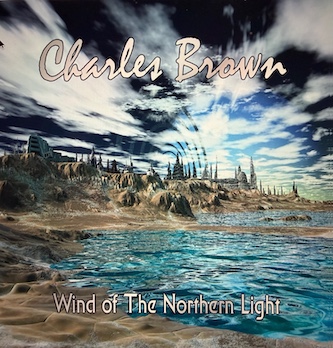 Following in the sonic footprints of his two most recent masterworks, Explorer Of Life (2017) and A New Awakening (2023), Denver-based guitarist and composer / conceptualist Charles Brown returns in 2026 with an album that improves upon his unique approach to electric hard-rock guitar meets instrumental rock. Unlike some heavy metal / hard rock recording artists, Charles takes the lead from power chord mastermind guitarist of The Who, Pete Townshend. Charles is cited as an ardent Townshend aficionado in the past, and on the 2026 release of Wind Of The Northern Light, the comparison is equally valid.
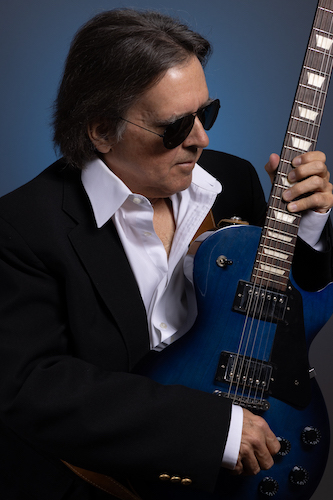 mwe3: Coming after Explorer Of Life (2017) and A New Awakening (2023), Wind Of The Northern Light might be your best album. Connect the dots so to speak from your last three albums up to and including Wind Of The Northern Light?
 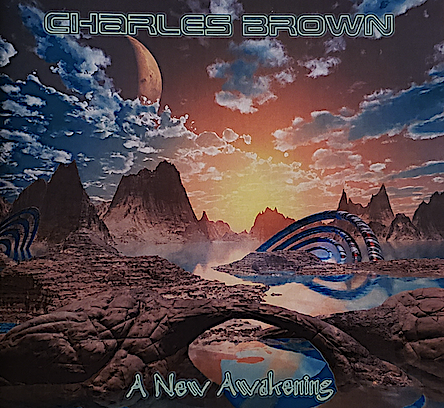 Charles Brown: I wanted to start off the CD with a couple of upbeat kind of tracks with soaring, melodic guitar melodies. But, I also wanted to include other more textural things beyond the hard rock riffs. Kind of a “Light & Shade” type of thing Jimmy Page did with Led Zeppelin.
 mwe3: “Chase The Sun” is also another showcase for your acoustic guitar and synth. Is “Chase The Sun” one of the more starry-eyed sounding tracks on the new album?
 Charles Brown: That one is more of my hard rock side. But even with the hard rockers, I like to throw in an acoustic/melodic break or section. More of the Light & Shade/prog influence.
 Charles Brown: Instrumental guitar is a very niche oriented style. It’s mostly associated with Steve Vai, Joe Satriani, etc. I’m certainly not in that league, so I’ve tried to incorporate the guitar synth and the light & shade approach to make things hopefully more interesting to listen to than just shredding up and down the guitar. I have to say the level of guitar players these days is amazing. There’s so many I come across on YouTube, etc. Actually, I just recently saw Blackberry Smoke. I have to say it's so refreshing to see a player like Charlie Starr, who is a totally hot guitar player who isn’t just racing all over the place up and down the neck. Ultimately, I think the best music is where the emphasis is on the song!
 mwe3: How many albums have you released over the years and what was your very first album titled? I guess first things first, so good luck with Wind Of The Northern Light. You should do a compilation drawing on your many excellent albums.